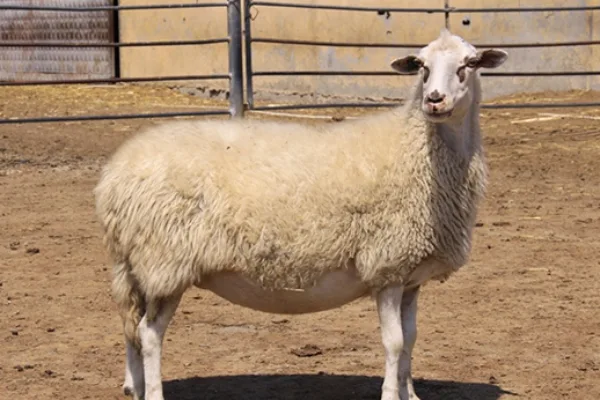
Imroz Sheep: Gökçeada's Rare Native Sheep Breed
- Turkey's smallest sheep breed: withers height 56–68 cm, live weight 25–35 kg
- Only 3 purebred breeders remain on the island (Slow Food Foundation, 2024)
- Rare breed listed in Slow Food's Ark of Taste (Arca del Gusto)
- Sheep roam freely in pastures year-round — no fee to see them
- Geographical indication for "Imroz Lamb Meat" in final stage
While driving on Gökçeada, you'll encounter a flock right in the middle of the road. You have to stop. These small, black-spotted, oddly calm animals don't hurry; they don't care where you're going. First-time visitors always wonder: "Who owns these?" The answer is simple: each flock has an owner, but that owner doesn't keep them penned. The island's pastures are open to all, and the sheep know it well.
This is the visible face of a semi-wild husbandry system that has persisted for centuries — and without realizing it, you're face-to-face with a rare breed officially included in Turkey's genetic resource conservation program.
Small Stature, Tough Character
The Imroz sheep surprises you physically. Not dog-sized, of course, but when you pass by, you notice it's much smaller than expected. It holds the title of Turkey's smallest sheep breed: withers height 56–68 cm, body length 58–70 cm, live weight 25–35 kg. But this smallness isn't weakness; it's the result of millennia of adaptation to the island's rugged terrain and harsh winter tramontana winds.
Physical Profile: Those Black Spots Are Key
The breed is easy to recognize. Distinct black spots around the mouth and eyes on a white body, spiraling horns on rams, and a long thin tail — when you see these together, you're looking at an Imroz sheep. Ewes are usually hornless, though studies show up to 30% may have small horn remnants. The fleece is coarse and mixed, requiring shearing twice a year, used for local traditional purposes rather than industrial wool production.
Productivity: Milk Stands Out
As a dual-purpose breed, the Imroz sheep excels in milk production. According to Çanakkale Onsekiz Mart University research, lambs have an average birth weight of 3.22 kg, weaning weight at 90 days of 19.38 kg, and daily live weight gain of 179.81 g/day. These figures show the breed is quite productive even under adverse conditions.
Its meat is something else. Raised on pastures seasoned with thyme, wild herbs, and salty sea breezes, the animals have a distinctive Aegean flavor. Those who eat lamb dolma or kid tandır slow-cooked for 4–5 hours in clay ovens at village taverns understand the difference; it all starts in the pasture.
A Centuries-Old System: The Logic of Free-Range Farming
Last winter, I came across a breeder near Dereköy. He was trying to gather his flock. "Where are they now?" I asked. "I don't know exactly," he said, shrugging. "They're usually around Eşelek this season." He smiled: "They know better than me where they should be."
That sums up the traditional husbandry practiced for centuries. The sheep never enter a pen year-round; they live in the island's natural pastures, finding their own water sources. No artificial feed or medication. While official "organic" certification isn't widespread, it's effectively a fully organic production system.
Gökçeada's Cittaslow (Slow City) status already supports such slow and traditional production models. The Imroz sheep is the most tangible, visible example. When planning nature walks and activities on the island, include the inland pasture areas in your route — encountering flocks can be one of the most ordinary yet memorable moments on the island.
Why It's Endangered and What's Being Done
An estimated 50,000 head of livestock exist on the island, but this number is misleading. According to Slow Food Foundation data, only 3 purebred breeders remain today. The vast majority of other flocks consist of crossbred individuals.
Sources of Threats
- Crossbreeding with modern breeds: Faster-growing foreign breeds seem more profitable in the short term
- Youth exodus: Livestock farming doesn't appeal to younger generations, and migration continues
- Marketing challenges: Uncertainty over organic certification prevents the product from achieving its deserved value
- Illegal slaughter: Animals roaming freely in pastures are at risk
The Ministry of Agriculture and Forestry has included the Imroz sheep, along with Kıvırcık and Sakız breeds, in its genetic resource conservation program; 200 animals are under official protection for six years. Internationally, it is listed in the Slow Food Foundation's Ark of Taste (Arca del Gusto) — a catalog of endangered traditional food products. This listing shows the breed's biological and gastro-cultural value is recognized globally.
Efforts for a geographical indication for "Imroz Lamb Meat" are ongoing. Coordinated by the Gökçeada District Governorate and Çanakkale Onsekiz Mart University, once the application is complete, this traditional product will gain a recognized identity like Ezine cheese or Gemlik olive oil. Some practical issues on the island, like parking problems, remain unchanged; but this geographical indication could provide a real boost to the local economy in the long run.
| Info | Details |
|---|---|
| Entry fee | Free — sheep roam freely in pastures |
| Best time | April–May (lambing); they retreat to shaded areas in summer |
| Where to see | Between Tepeköy and Dereköy, Eşelek plateau, around Uğurlu |
| Breed size | Withers 56–68 cm, weight 25–35 kg (Turkey's smallest) |
| Purebred breeders | Only 3 (Slow Food Foundation, 2024) |
| Lamb meat tasting | Taverns on the island; Kaleköy and Zeytinliköy stand out |
| Caution | Though they seem free, they have owners; don't startle the flocks |
When planning your visit, I recommend checking the island's weather; fog and wind can change suddenly in inland pasture areas.
Frequently Asked Questions
Where can I see Imroz sheep on Gökçeada?
You can encounter them in almost every pasture area on the island. The areas between Tepeköy and Dereköy, Eşelek plateau, and around Uğurlu are among the most common spots. You might even see them by roadsides or village squares. Renting a car makes it easier to reach inland areas; walking is possible but distances range from 10–20 km.
Why is the Imroz sheep endangered?
According to Slow Food Foundation data, only 3 purebred breeders remain on the island. Main reasons: crossbreeding with faster-growing modern breeds, youth moving away from livestock farming, and marketing challenges due to lack of organic certification. The ministry's conservation program covers 200 animals, but the purebred population remains highly fragile.
Can I approach the sheep?
Though they seem free, each flock has a breeder. Avoid startling the animals and don't get too close. Photography is allowed — from a respectful distance, without sudden movements.
Where can I eat Imroz lamb on the island?
It's served at most traditional taverns on the island. Kid tandır slow-cooked for 4–5 hours in clay ovens and lamb dolma are standout dishes. Village taverns in Kaleköy and Zeytinliköy are well-known for this. Prices vary by season.
Does the Imroz sheep have a geographical indication?
The application for "Imroz Lamb Meat" geographical indication is being coordinated by the Gökçeada District Governorate and Çanakkale Onsekiz Mart University. The process hasn't concluded yet; once registered, the product will gain a standardized identity in national and international markets.
📍 Merkez (Çınarlı) — Harita
📍 Bu Bölgedeki İşletmeler
🍽️ Yeme & İçme
🏪 Diğer İşletmeler
🏷️ Etiketler: