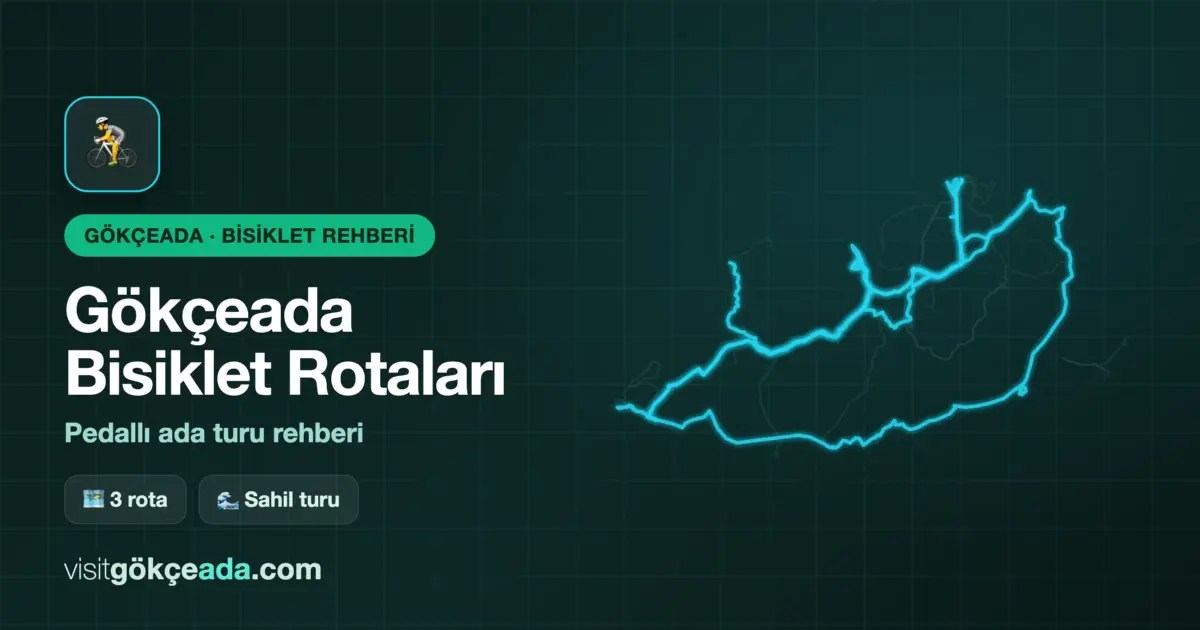
Gökçeada (Imbros) Cycling Routes: A Complete Guide to Exploring the Island by Bike 2026
- Gökçeada has 4 main cycling routes ranging from 50–82 km
- The biggest challenge isn't the hills but the island wind — starting early in the morning makes a big difference
- Gravel or mountain bikes are recommended; narrow road bikes struggle on unpaved sections
- Ideal seasons: April–June and September–October; avoid summer afternoons
- You can bring your bike on the ferry; rentals are available in the main town (Çınarlı)
The first time I cycled in Gökçeada, it wasn't the hill ahead that stopped me — it was the wind blowing from the side. The island tests you in this way: there are almost no flat roads, but the scenery and silence you earn are unmatched by any other activity.
In recent years, the number of cyclists getting off the ferry has noticeably increased. Some come with tents and sleeping bags, others just for day trips. Both are possible — but preparation is key.
Cycling in Gökçeada: Which Is Harder — the Wind or the Hills?
The island wears you down not with hills but with wind. You'll read the same thing on forums and blogs, and it's true. On southern and southwestern routes especially, pedaling against the wind slows you down even on flat ground. Spring mornings are generally calmer — setting out between 7:00–9:00 AM offers a very different experience from riding the same route in the afternoon.
The terrain can also surprise you. Most of the routes are paved, but there are sections of gravel and cobblestone. A gravel bike or one with tires over 38 mm is a much better choice; narrow road bikes struggle significantly on some routes.
Four Main Routes and Their Stats
Gökçeada's four main cycling routes start and end in the main town (Çınarlı). Each reveals a different side of the island.
Village Tour — 56 km, 1,170 m Elevation Gain
Connecting the inland villages, this route is the most balanced option for families and intermediate cyclists. It passes through stone houses and vineyards in villages like Dereköy, Zeytinliköy, and Tepeköy. Riding this route in early April after a long winter, the roadsides are still green, the villages are quiet — you notice things on a bike that you miss in a car.
East Coast — 50 km, 1,050 m Elevation Gain
This route offers coastal views. The terrain is moderately challenging, suitable for experienced but recreational cyclists. Some sections have almost no traffic — adding to the route's appeal.
Kefalos Cape and South Coast — 82 km, 1,260 m Elevation Gain
The longest and toughest route on the island. Completing it takes you to the southern cape and a climate zone completely different from the north. Not recommended for inexperienced cyclists; bring water and energy bars. Difficulty level: 4 out of 4.
Marmaros Waterfall Route — 62 km, 1,160 m Elevation Gain
This route partly follows forest roads to reach Marmaros Waterfall. The terrain is moderate to hard; riding an MTB significantly increases comfort. Stopping at the waterfall becomes a natural part of the ride.
Merkez–Kaleköy: Short but Steep
For those short on time or fitness for longer routes, the Merkez–Kaleköy route offers a different starting point. It's about 11 km long, with the first section paved — until you reach the Yukarı Kaleköy turnoff. After that, there's a steep ramp of about 800 m on cobblestones. Since there's no parking, arriving in Kaleköy by bike is actually an advantage; you can reach places cars can't.
First-timers on this route may have to walk their bikes up the climb. No shame — many people do. What matters is the view you get at the top.
Bike Rental, Repairs, and Ferry Transfer
You can take your bike on the Kabatepe–Kuzu Harbor ferry; the ferry accepts bicycles. When planning your transfer, check the current ferry schedules. Long-distance bus companies are often reluctant to carry bikes; confirm in advance.
There are bike rental shops in the main town. You can also arrange rentals through your accommodation — this is often more practical. E-bikes are not yet common on the island; some guesthouses may have them in summer, so ask early. You can take a meal break at Çınarlı or other areas where you're staying. There's a bike repair shop in the main town, and a gas station about 1 km away offers tire service.
| Info | Details |
|---|---|
| Bike rental | In the main town (Çınarlı) and at accommodations |
| E-bike | Limited; some facilities may have them in summer, ask ahead |
| Repair service | A mechanic in the main town; tire service at a gas station ~1 km away |
| Ferry transfer | Bikes accepted on the Kabatepe–Kuzu Harbor line |
| Number of routes | 4 main routes, 50–82 km |
| Ideal season | April–June and September–October |
| Summer tip | Ride between 7:00 AM–1:00 PM; rest from 1:00–4:00 PM |
| Water supply | At least 2 liters for long routes; village fountains available |
| GPX files | Available on Wikiloc and Strava under the tag "Gökçeada" |
Best Season and Summer Heat Warning
April–June is the most balanced time for cycling. Roads aren't crowded, the weather is generally mild, and the scenery is at its most vibrant. September–October is also nice; the sea is still warm, and crowds have thinned.
Cycling in July–August is possible but requires different planning. Starting early (7:00–8:00 AM) and taking a break between 1:00–4:00 PM becomes essential during this period. Carry at least 2 liters of water; village fountains are available, but depending on your route section, long breaks may be needed. Always check the weather forecast before starting — the island wind can be different from what you expect.
The bike + camping combination is also growing in popularity. There are campsites in the Aydıncık area, and the number of travelers carrying tents on their bikes increases every year. In Aydıncık, you can both camp and learn to surf. Exploring rock pools is also a popular activity. I recommend checking out other activities on the island on our blog — a cycling tour one day and different routes on other days make for a great itinerary.
- Choose a gravel or mountain bike; narrow road bikes struggle on gravel and cobblestone roads
- Check the local wind forecast in the morning
- The Village Tour and East Coast are good options for starting day trips
- Be prepared for the ramp after the Kaleköy turnoff — walking your bike is perfectly normal
- Download GPX files from Wikiloc and Strava; signal can be intermittent
- If renting a bike, early booking is recommended in midsummer
Frequently Asked Questions
Can I rent a bike in Gökçeada?
Yes, there are rental shops in the main town. You can also arrange it through your accommodation, which is often more practical. E-bikes are limited — some facilities may have them in summer, so ask ahead.
Is cycling in Gökçeada difficult?
The island is hilly; there are almost no flat roads. The main challenge is the wind. Mornings are generally calmer. For inexperienced cyclists, starting with short routes — like Merkez–Kaleköy or between Zeytinliköy and Tepeköy — is a smart introduction.
Which bike type is suitable — MTB or road bike?
A gravel bike or one with tires over 38 mm is the best choice. All routes have mixed terrain: asphalt along with dirt and gravel roads. Narrow road bikes struggle significantly on some routes; mountain bikes offer comfort but can be heavy.
Can I take my bike on the ferry to Imbros?
Yes. The Kabatepe–Kuzu Harbor ferry accepts bicycles. Long-distance bus companies are often reluctant; confirm in advance. For current schedules, check the ferry schedules.
Where can I get my bike repaired in Gökçeada?
There is a bike repair shop in the main town. A gas station about 1 km from the center also offers tire service. Check your tire pressure and chain condition before heading out on a long route.
📍 Merkez (Çınarlı) — Harita
📍 Bu Bölgedeki İşletmeler
🍽️ Yeme & İçme
🏷️ Etiketler: