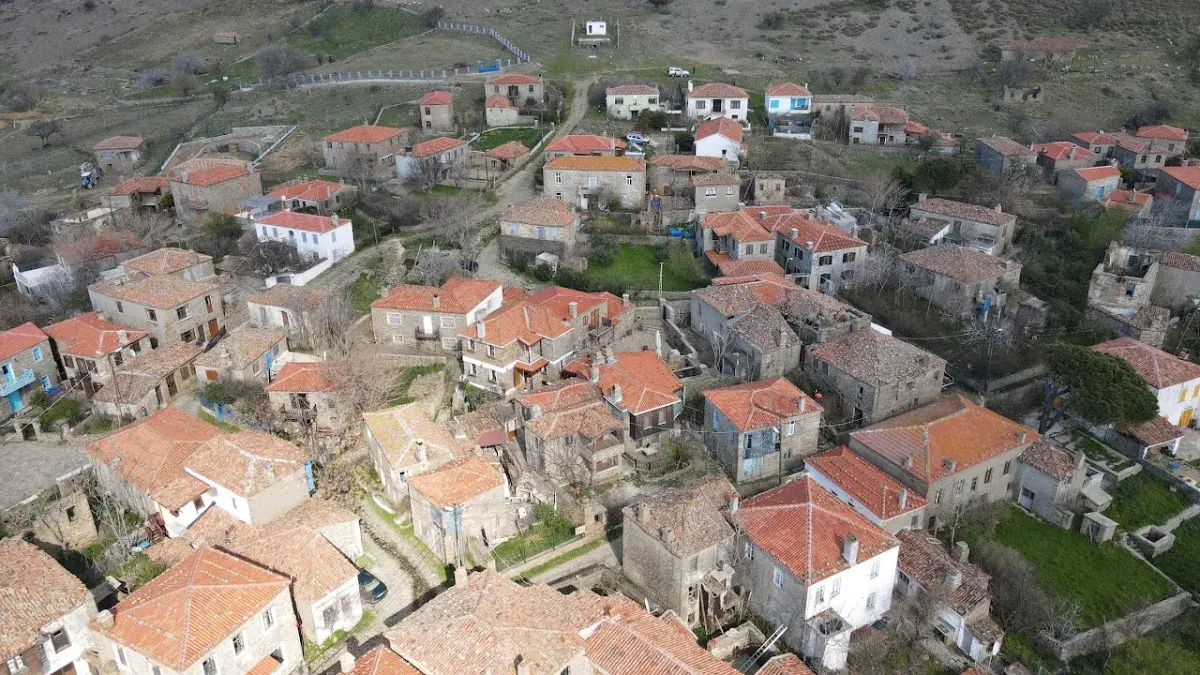
Gökçeada (Imbros) Village Guide: Explore 10 Villages in 3 Days
Gökçeada's villages hold the island's true soul. With stone streets, church bells, centuries-old plane trees, and unique stories, these are not just photo-worthy landscapes—they are living, breathing places that whisper tales of the past.
Before You Start: Do You Need a Car?
Yes. The villages of Gökçeada are not close enough to walk between each other or from the town center. Driving from one end of the island to the other takes about an hour. While there are minibus services, they are infrequent. For an efficient village tour, you'll need to bring your own car on the ferry or rent a vehicle on the island. In the town center, scooters rent for around 70 TL per day, and cars from about 2,700 TL (2025–2026 season).
Before you set off, visit the Gökçeada City Museum in the town center. This museum showcases the living cultures of Greek, Turkish, and immigrant communities, providing context for your village tour and making your 3-day itinerary much more meaningful.
The Villages: Each with Its Own Identity
1. Zeytinliköy (formerly Aya Todori)
Distance from center: 3 km | Driving time: 5 minutes
The island's oldest church, Agios Georgios, is in this village. The historic coffeehouse Madam's Kahvesi, dating back to the 1920s, welcomes visitors with dibek coffee (traditionally ground in a mortar) and Greek sweets like revani (semolina cake) and lokma (fried dough). Zeytinliköy is one of four protected villages, preserving much of its stone architecture and street layout.
Beyond being home to the island's oldest church, the village stands out with its year-round open cafes. Enjoying a dibek coffee with mountain-sea views is one of the most memorable Gökçeada experiences.
2. Tepeköy (formerly Agridya)
Distance from center: 11 km | Driving time: 15 minutes
The highest village on the island (approx. 350 m). Its centerpiece is a 625-year-old giant plane tree at Çınaraltı (Under the Plane Tree), whose shade could cover a small town. The area is surrounded by restaurants and garden cafes.
Tepeköy emptied after the forced migration of the Greek population post-1964, but today it has been revived by both locals and visitors. The village is famous for its homemade wines. The Feast of the Assumption (Meryem Ana Panayırı), held annually from August 14–16, is the island's most colorful cultural event: the village square fills with food, sirtaki dancing, local wines, and all-night festivities. Imbrians from around the world return to the island for this occasion.
3. Kaleköy (formerly Kastro)
Distance from center: 5 km | Driving time: 8 minutes
The only seaside village on the island. The İskiter Castle (from the Genoese/Byzantine period) on the hill is one of the island's most impressive spots for both history and views. From the cove, the ruins silhouette against the backdrop of Samothrace Island.
The pier in the harbor was built by the French Navy during World War I. Today, fishing boats and summer yachts anchor here. Kaleköy is one of the island's most developed tourist hubs: boutique hotels, fish restaurants, sunset dining, and walking distance to Yıldız Cove and Mavi Cove make it an ideal base for accommodation.
4. Eski Bademli (formerly Gliki)
Distance from center: 4 km | Driving time: 7 minutes
Its Greek name "Gliki" means "sweet." Perched on a hill between Kaleköy and the center, this village is shaped by the island's most sheltered stone texture. The Church of the Virgin Mary and a 250-year-old plane tree are the village's two symbols. At Filos Kahvesi, you can find local honey and homemade products.
The village overlooks Samothrace Island. It's no wonder it's called "the island's balcony": the Aegean view from here creates one of the island's most beautiful open-air paintings.
5. Dereköy (formerly Shinudi)
Distance from center: 14 km | Driving time: 20 minutes
Once the largest village in Turkey and the Balkans: over 2,000 residents, more than 20 coffeehouses, 2 cinemas. After the 1923 population exchange, the Greek population gradually dwindled; after 1964, the remaining Greeks were forcibly displaced. Today, it's a small settlement of 15–20 people.
But Dereköy is not just a sad story. The historic laundry building still stands—one of the island's most unique architectural remnants. Centuries-old olive trees and stone houses stand as silent witnesses to that once-great village. It's a special stop for photography and architecture enthusiasts.
6. Yeni Bademli
Distance from center: 6 km | Driving time: 10 minutes
Just 5 minutes from Yıldız Cove, and a short distance from Kaleköy and Mavi Cove. The most convenient village for grocery and snack needs. Nearby Yeni Bademli Mound has archaeological excavations revealing findings from the Early and Late Bronze Age, dating back 5,000 years.
7. Eşelek
Distance from center: 8 km | Driving time: 12 minutes
This village has an unusual origin story: its people originally came from Biga district in Çanakkale. When the original Eşelek Village there was submerged due to dam construction, the residents were resettled here and named their new home after the old one. It's the closest village to a beach, just 2 km from Aydıncık Beach. Nearby Gökçeada Salt Lake transforms into a dazzling white salt surface in summer, offering breathtaking views; its mud is said to be rich in sulfur and beneficial for rheumatism and psoriasis.
8. Şirinköy
The youngest village on Gökçeada, established in 2000 for Turkish immigrants from Bulgaria. About 150 households. Within walking distance of Gizli Liman (Hidden Harbor) and Yuvalı Beach; with its calm, family-friendly atmosphere, it's a suitable alternative for those wanting to escape the island's bustling tourist areas.
9. Uğurlu
Distance from center: 25 km | Driving time: 30 minutes
This remote village in the west has recently made headlines in the archaeology world. Discovered in 1998 and excavated since 2009 under Prof. Dr. Burçin Erdoğu, the Uğurlu-Zeytinlik Mound contains 5 architectural structures dating back 8,800 years. These round, pit-based, wattle-and-daub buildings form the oldest known Neolithic settlement in the Eastern Aegean islands. It is considered key to understanding how agricultural life began in Europe.
Uğurlu also hosts film screenings for BIFED (Bozcaada International Film Festival). Uğurlu Beach on the village's coast offers one of the island's purest sea experiences with few visitors.
3-Day Village Tour: Where to Start?
Start from the town center. First stop Zeytinliköy: see Agios Georgios church, have a dibek coffee at Madam's Kahvesi. Then head up to Tepeköy, have lunch under the plane tree. In the afternoon, go to Dereköy: explore the historic laundry, old Greek houses, and olive groves. Return to the center for the evening.
Morning at Kaleköy. Climb İskiter Castle, observe the harbor and surrounding coves. In the afternoon, visit Eski Bademli (Gliki) for its stone streets, the Church of the Virgin Mary, and Filos Kahvesi. In the evening, swim at Yıldız Cove or Mavi Cove via Yeni Bademli.
Early morning head to Eşelek; swim at Aydıncık Beach, see the Salt Lake. In the afternoon, move on to Şirinköy and Uğurlu. Visit Uğurlu-Zeytinlik Mound, end the day at Uğurlu Beach.
Distance Table Between Villages
| Village | Distance from Center | Driving Time |
|---|---|---|
| Zeytinliköy | 3 km | 5 min |
| Eski Bademli | 4 km | 7 min |
| Kaleköy | 5 km | 8 min |
| Yeni Bademli | 6 km | 10 min |
| Eşelek | 8 km | 12 min |
| Tepeköy | 11 km | 15 min |
| Dereköy | 14 km | 20 min |
| Uğurlu | 25 km | 30 min |
Food & Drink Guide: What to Try in the Villages
- Zeytinliköy: Dibek coffee, revani, lokma, olive oil dishes
- Tepeköy: Homemade wine, tavern under the plane tree, goat cheese
- Kaleköy: Fresh fish, sunset dining, seafood
- Eski Bademli: Local honey, homemade products (Filos Kahvesi)
- General: Goat milk ice cream, island cheese, island sucuk (spicy sausage), olive oil
Best Time to Visit
May–June and September–October are the ideal periods for village tours. The island is green, mild, and calm; cafes and restaurants are open, but the summer crowds haven't arrived (or have left).
July–August is perfect for swimming, but some villages get relatively crowded and can be hot.
August 14–16 offers a special experience: during the Feast of the Assumption in Tepeköy, Imbrians from around the world return to the island. The village square fills with music, food, and dance. Book accommodation well in advance.
Winter sees most villages largely empty, with many places closed. However, for hikers and photographers who prefer this period, the island is at its quietest and most authentic.
Frequently Asked Questions
Is there an entrance fee for Gökçeada's villages?
No. All villages are free to visit; no entrance fees are charged.
Is a village tour suitable for children?
Yes. The villages are safe, quiet, and surrounded by nature. However, village roads can be steep and cobbled, making strollers difficult. Comfortable shoes and a car are essential.
Which are the Greek villages?
Zeytinliköy, Tepeköy, Kaleköy, Eski Bademli, and Dereköy are historic Greek villages, all featuring stone architecture, churches, and protected traditional fabric.
Can I visit the Uğurlu mound?
During active excavation periods, site access may be limited. Uğurlu village and beach are always open; you can read the mound's information board at the village entrance.
Which village has accommodation?
Kaleköy has the most developed accommodation options on the island: boutique hotels, apart hotels, and pensions. Zeytinliköy and Eski Bademli also have small boutique facilities.
Conclusion: 10 Villages, 1 Island, Countless Stories
A tour of Gökçeada's villages is not just a sightseeing trip; it's a journey to read the island's memory. In each village, a different sound is heard: the creak of the coffee grinder in Zeytinliköy, the rustle of the plane tree in Tepeköy, the silence of stone walls in Dereköy, the weight of 8,800-year-old soil in Uğurlu.
Is 3 days enough? Most visitors want more. But 3 well-planned days are a good start to get to know the island's village soul.
For more information about Gökçeada, visit our blog page.
If you're wondering where to eat in Gökçeada, check out our business guide.
If you're especially curious about Eşelek Village, take a look at our Eşelek Village guide.
To explore accommodation options in Kaleköy, check out Fengari Hotel.
Also, if you want to learn more about transportation by car in Gökçeada, check out our fuel and charging station guide.
For more information about Şirinköy, check out our Şirinköy guide.