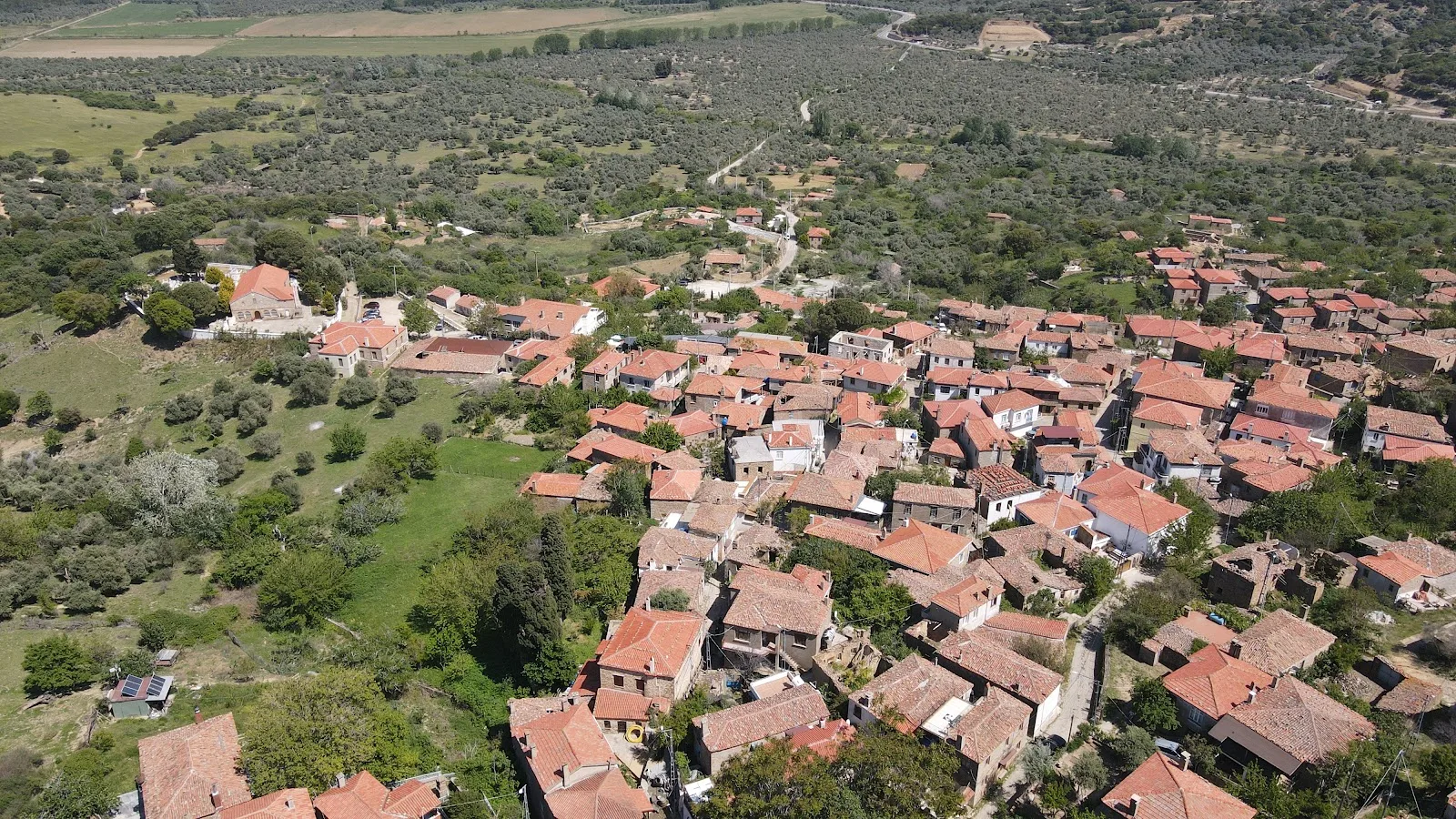
Gökçeada (Imbros) Architecture: Stone Houses, Churches & Building Heritage
- All five historic Greek villages on Gökçeada are under architectural conservation (SIT) status
- Before the late-18th-century earthquakes, mudbrick was used; then island stone took over
- The island has over 9 churches and around 360 chapels
- Zeytinliköy's yellow stone provides natural thermal insulation
- Villages are free to visit; a car is recommended, but explore on foot inside villages
Living on Gökçeada has one advantage: every morning when you look out the window, you notice the stone's color shifting with the light. Last winter, when I went to help a friend repair his house in Zeytinliköy, I was amazed to see the wooden beam pulled from the wall still perfectly intact. Over a hundred years old, the wood had breathed between the stones without rotting. That's Imbros architecture — unpretentious but stubborn.
In this article, I've gathered everything I know and researched about the island's architecture: from its origins to the present day, from stone houses to churches, building techniques to restoration realities. This isn't a tourist brochure; it's a building story from someone who lives here.
Anatomy of Stone Houses: Traditional Residential Architecture on Gökçeada
The houses in the island's five Greek villages share a common language. Two-story structures with the lower floor used as storage or stable and the upper floor as living space. Stairs are outside, toilets separate from the main building, and a round stone-paved courtyard on the east side. A typical house has a basement of about 60 square meters. Red tile roofs, simple facades, proportional prismatic masses.
The Story of the Shift from Mudbrick to Stone
The stone architecture we see today hasn't always been there. According to Gökçeada Imbros Magazine, until the late 18th-century earthquakes, mudbrick was the main building material on the island. When the earthquakes destroyed the mudbrick houses, people switched to more durable island stone. So today's stone texture isn't a choice but nature's imposition. Few people know this — I've never come across it on travel sites.
Zeytinliköy's Yellow Stone
When you first enter Zeytinliköy, you immediately notice the color difference. Unlike other villages, the houses here are built from a yellowish island stone. This stone has a wonderful property: it keeps you warm in winter and cool in summer — natural thermal insulation. One summer day, when I entered a house in Zeytinliköy, it was 35°C outside, but inside it felt like the air conditioning was on. People say the stone's pores breathe — no exaggeration, it's true.
Building Materials and Techniques
The basic materials of island architecture are:
- Rubble stone: Unprocessed, natural stones used as the main material for walls.
- Cut stone: Shaped stones used at corners, door and window frames. Dereköy's laundry is a good example of both used together.
- Khorasan mortar: A binder made from fired clay powder, lime, and water. More durable than cement mortar. Still preferred in restorations.
- Wooden beam: Horizontal wooden beams placed in walls to prevent earthquake cracks.
- Dry stone technique: Mortarless stone stacking for garden and boundary walls — standing for centuries.
Every two or three stones, a keystone is added for structural integrity. Large, smooth stones are used at corners. It looks simple, but there's serious engineering behind it.
Five Historic Villages: Architectural Character Differences
All five Greek villages on Gökçeada are declared SIT (protected) areas, but each has its own architectural character.
Zeytinliköy — Best Preserved Texture
The island's best-preserved village. Yellow stone houses, flower-filled courtyards, sloping streets. You can see the most vivid examples of Gökçeada's cultural heritage here. Agios Georgios Church (1838), the island's oldest church, is located here. IYTE Architectural Restoration department has conducted a comprehensive urban site analysis in this village.
Dereköy — Open Air Museum
The most visited village. The historic Greek laundry built with cut and rubble stone is an architectural work in itself. It has two churches: Hagia Marina (at the village entrance) and Koimesis Tis Theotokos (in the village square). Once, I went to Dereköy in the middle of winter; there wasn't a single tourist. I stood under the stone arches of the laundry and heard the water still flowing. In that silence, the stone speaks differently.
Other Villages
Tepeköy is the highest village; a 600-year-old plane tree is the focal point of the village square. In Kaleköy, you can see castle stones reused in house walls — practical recycling. Eski Bademli offers a different atmosphere with its high walls, narrow "sukatya" passages, and panoramic sea views.
| Info | Detail |
|---|---|
| Village entry | Free, open year-round |
| Center → Zeytinliköy | ~8 km |
| Center → Tepeköy | ~12 km |
| Center → Dereköy | ~10 km |
| Transport | Car needed, walk inside villages |
| Best time | April-May, September-October |
| Church visits | Most closed; open during August Panayir |
| Footwear | Flat-soled, non-slip (stone streets) |
Churches and Places of Worship: Traces of the Basilica Plan
Official records show 8 churches on Gökçeada, while research identifies up to 11. There are also about 360 chapels — locals call them "monasteries" too. All churches are basilica-planned, usually with three naves and a narthex. The central nave is wider than the side naves, with an apse at the east end.
Exteriors are simple. The real richness is inside: icons, woodwork, frescoes. Byzantine heritage blends with late Ottoman style. Evangelismos Teotoku (Tepeköy, 1832) and Agios Georgios (Zeytinliköy, 1838) are the most striking examples.
An interesting detail: despite 500 years of Ottoman presence on the island, only 1 mosque, 4 laundries, 1 fountain, and 1 tombstone have survived to the present day. The dominance of the Greek population is clearly reflected in the architectural heritage.
Construction Threat and Conservation Tension
This is one of the most sensitive issues on Imbros. Gökçeada, the world's first and only "Cittaslow" (slow island), faces uncontrolled construction pressure. In Yıldızköy, despite Turkey's only underwater national park, construction plans were made — the Conservation Board did not permit them. In Bademli, zoning plans were canceled by the court.
Quarries, uncontrolled construction, and pressure around Gökçeada Lagoon are serious. The Cittaslow philosophy says "local architecture must be preserved as is," but things don't always work that way on the ground. Lack of inter-institutional coordination is the biggest problem.
On the restoration side, there are promising developments. Conservation Board approval is mandatory for registered buildings, and projects are prepared by a restoration architect. But the limitations of rubble stone technique in providing wide spans make it difficult to reconcile modern needs (indoor bathrooms, indoor stairs) with historical character. Gökçeada's cultural heritage should be the insurance for this balance — but it's not enough alone.
Frequently Asked Questions
Can I visit the historic Greek villages on Gökçeada?
Yes, all five villages are freely accessible year-round. No entrance fee. You can explore them like open-air museums; but do not enter private properties without permission.
Can I buy and restore a stone house on Gökçeada?
Yes, but for registered buildings in SIT areas, Conservation Board approval is mandatory. Survey, restitution, and restoration projects must be prepared by a restoration architect. There are specialized architecture offices in the region.
Are the churches open to visitors?
Most are closed. They open during the Panayir (Panigiri) festivals in August, with free entry. Aya Panayia (Center) is still in active use. Exterior architectural inspection is always possible.
What is the best time for an architectural tour?
April-May and September-October are ideal. Mild weather, quiet villages, good light for photography. Churches open in August, but tourist crowds increase. Avoid the midday heat; visit in the morning or late afternoon.
Which is better, Zeytinliköy or Dereköy?
They offer different experiences. Zeytinliköy has the best-preserved texture — quiet, flowery, peaceful. Dereköy feels more like a "museum" — with its laundry, two churches, and large-scale stone houses. You can taste local flavors at Falia Taverna. Parking is tricky, but both are worth seeing. They're half an hour apart.
📍 Merkez (Çınarlı) — Harita
📍 Bu Bölgedeki İşletmeler
🍽️ Yeme & İçme
🏷️ Etiketler: