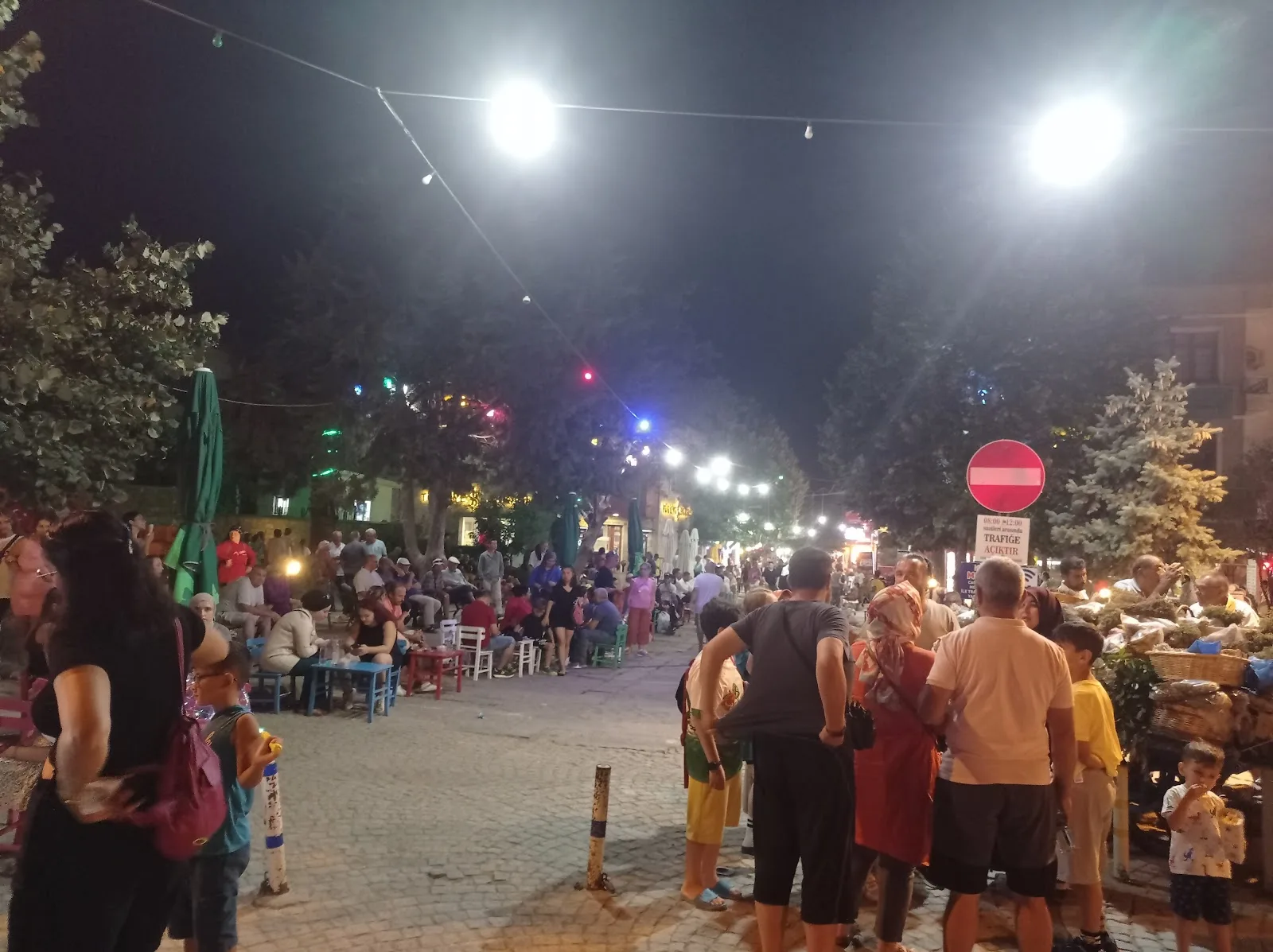
Gökçeada Cittaslow: Turkey's First Slow Island
- Gökçeada has been Turkey's first and only slow island, a member of the Cittaslow (Slow City) network since 2011
- Cittaslow membership requires meeting 72 criteria under 7 main headings
- Settlements with a population under 10,000 can apply — Gökçeada is borderline with around 10,000 residents
- Local products like Ladolia olives, Imbros sheep, and organic honey are carriers of the Cittaslow spirit
- Turkey has nearly 20 Cittaslow members, but Gökçeada is the only island
If you pay attention when getting off the ferry on Gökçeada, you'll see an orange snail logo at the dock. When I first came, I thought "what's that?" Then I learned this symbol is the emblem of Cittaslow — the slow city movement. The island is one of the rare places that truly lives up to this logo.
One November morning, walking from Tepeköy to Dereköy — not a single car passed me on the road — it hit me: here, "slow" isn't a criticism, it's a conscious choice. Imbros already had its own rhythm, but Cittaslow membership turned that into an official identity.
What Is Cittaslow and How Did Gökçeada Join?
Cittaslow is an international network founded in 1999 in Orvieto, Italy. Its core idea is simple: to protect local life, local production, and local identity against the speed of globalization. Think of it as the urban extension of the Slow Food movement — not just food, but all of life slows down.
Gökçeada was accepted into this network in 2011. Settlements with a population under 50,000 can apply (some sources cite 10,000 as the limit — Gökçeada meets both criteria). During the application process, the island's environmental policies, infrastructure, local production capacity, and hospitality culture were evaluated. The result: Turkey's first and still only slow island title.
What Do the 72 Criteria Mean?
Cittaslow membership isn't just talk; there are 72 concrete criteria under 7 main headings:
- Environmental policies: Air and water quality, waste management, renewable energy use
- Infrastructure policies: Bike lanes, accessibility for the disabled, green space ratio
- Urban quality of life: Noise control, green space maintenance, public space arrangement
- Agricultural and gastronomic policies: Support for local products, organic farming incentives
- Tourism policies: Sustainable tourism, cultural heritage preservation
- Hospitality: Visitor information, local guide services
- Social cohesion: Preservation of minority cultures, community participation
100% success isn't expected in all criteria. But direction and intention matter. Gökçeada excels in some areas (agriculture, gastronomy, hospitality) while still at the beginning in others (bike infrastructure, waste management).
Where Is the Cittaslow Spirit Felt on the Island?
Local Production and Gastronomy
The most tangible expression of Cittaslow is in the kitchen. While drinking dibek kahvesi (traditional mortar coffee) in Zeytinliköy, a woman at the counter said, "the olive oil is ours, the coffee is ours, the water is ours" — that sentence sums up the Cittaslow philosophy.
Ladolia olives are the island's most famous local product. This variety, unique to Gökçeada, has adapted to the island's harsh winds and limestone soil. Unlike the industrial olive oil you see in supermarkets, there are still producers here who press in small stone mills. During the olive harvest in winter, you'll encounter tractors on village roads — it's one of the island's busiest times.
Imbros sheep are also carriers of the Cittaslow spirit. This endangered native breed is protected on the island. Initiatives like Elta-Ada Farm both keep the sheep breed alive and offer visitors a farm experience.
Stone Houses and Architectural Preservation
The stone houses of Dereköy, the narrow streets of Tepeköy — these aren't tourist decor but the real-life embodiment of Cittaslow's "urban identity preservation" criterion. Despite pressure from concrete development, the stone texture has been preserved in most villages.
But to be honest: not every village is in the same condition. The center (Çınarlı) has grown somewhat haphazardly, with traces of unplanned construction. Some hotels on the coast are out of sync with the landscape. The Cittaslow label doesn't mean everything is perfect — it points to the direction things should go.
What Has Cittaslow Brought to Gökçeada?
The "slow island" label is a strong marketing tool. Especially for visitors from Istanbul and Çanakkale, the term "Cittaslow" is a symbol of trust. But the real gain goes beyond that.
Events like the EcoGastronomy Congress have put Gökçeada on the academic and gastronomic map. Held annually, this congress draws researchers on sustainable food and local production to the island. Such events are indirect but lasting benefits of Cittaslow membership.
There's also a psychological effect. Last summer, an elderly man sitting in a village coffeehouse said, "we don't sell the island anymore, we show it." That sentence sums up the most important impact of Cittaslow on locals: conservation awareness.
| Info | Detail |
|---|---|
| Cittaslow membership year | 2011 |
| Membership category | Island (only one in Turkey) |
| Number of criteria | 7 main headings, 72 sub-criteria |
| Population limit | Under 50,000 |
| Gökçeada population | ~10,000 (drops to 3,000-4,000 in winter) |
| Total members in Turkey | ~20 settlements (Seferihisar, Halfeti, Perşembe, etc.) |
| International network | 30+ countries, 280+ cities |
| Symbol | Orange snail logo |
Criticisms and a Realistic Assessment
Cittaslow membership isn't without criticism. Some islanders ask, "the logo was hung, but what actually changed?" and they're not entirely wrong. A few points:
Infrastructure gaps persist. Bike lanes are almost nonexistent. The wastewater treatment plant is insufficient. Water shortages can occur in summer. These are items directly addressed in Cittaslow criteria.
Summer crowds contradict the Cittaslow spirit. In July and August, the island's population swells to 3-4 times its normal size. Traffic, noise, trash... The "slow island" concept struggles during this period. As ferry capacity increases, so does this pressure.
But come in winter, then you'll understand. From November to March, Gökçeada is truly slow. Wind, rain, empty streets, open tavernas — that's the period that does justice to Cittaslow.
Things to Keep in Mind When Visiting Cittaslow Gökçeada
If you want to experience the slow island philosophy, here are a few tips:
- Shop at village markets — especially the Saturday market in the center, where local producers set up stalls
- Choose village grocery stores over supermarkets; you'll get to chat and contribute to the local economy
- Try walking and biking instead of driving — explore Gökçeada's bike routes to enjoy the island
- If you come during olive harvest (October-November), you can join picking events
- Reduce plastic use — the island is already taking steps toward plastic-free living
And one more thing: don't forget to check ferry schedules. In winter, services are reduced and can be canceled due to weather. That's part of the Cittaslow spirit — the island will wait for you, but at its own pace.
Frequently Asked Questions
What does Cittaslow mean?
It's a combination of the Italian "città" (city) and English "slow." In Turkish, it's used as "sakin şehir" (calm city). It's an international network aiming to preserve local quality of life, sustainable development, and cultural heritage.
When did Gökçeada get Cittaslow membership?
Gökçeada was accepted into the Cittaslow network in 2011. It was the second settlement in Turkey to receive membership after Seferihisar, but the first and only in the island category.
How does Cittaslow membership affect visitors?
There's no direct entry fee or restriction. However, the Cittaslow philosophy shapes the island's tourism policies: promoting local products, expanding nature conservation areas, and supporting cultural events.
Is Gökçeada really slow?
It depends on the season. In winter, definitely yes — the population drops to 3,000-4,000, and villages become quiet. In summer, especially July-August, crowds increase and "slowness" is a bit strained. The best periods are May-June and September-October.
Are there other Cittaslow members in Turkey?
Yes, about 20 settlements are members. Seferihisar (İzmir), Halfeti (Şanlıurfa), Perşembe (Ordu), Yenipazar (Aydın), and Göynük (Bolu) are some of them. But only Gökçeada is in the island category.
📍 Merkez (Çınarlı) — Harita
📍 Bu Bölgedeki İşletmeler
🍽️ Yeme & İçme
🏷️ Etiketler: