Gökçeada (Imbros) Mythology: The Island Where Gods Once Roamed
- The name Imbros may derive from Ambrosia (food of the gods) or the Luwian word Imaura (Great Mother Goddess)
- Homer's Iliad mentions Imbros in at least three different books
- Poseidon's winged horses were stabled in an underwater cave between Imbros and Bozcaada (Tenedos)
- Excavations at Yenibademli Höyük reveal 5,000-year-old settlement traces
- The acropolis of Kaleköy holds ruins of a 5th-century BC theater and a temple of Hermes
Imbros — now called Gökçeada — always brings back memories of sitting on the hilltop of Kaleköy at dusk, gazing at the sea. As the wind blows from the direction of Bozcaada (Tenedos), the silhouette of Samothrace appears, and you can't help but wonder: thousands of years ago, were these very waters shared by the gods? The island is one of the most mythologically rich spots in the Aegean, yet most visitors come and go without knowing it.
One winter morning, while wandering among the walls atop Kaleköy, I noticed a piece of marble wedged between the stones. There was a faint inscription on it. In that moment, I realized this hill is far more than a sunset selfie spot for tourists. Here, gods were worshipped, mystery rites were held, and coins were minted. Kaleköy is not just a village; it's one of the oldest worship centers in the Aegean.
The Origin of the Name Imbros: Does It Come from the Food of the Gods?
Until 1970, the island was officially called Imbros. So where does this name come from? Scholars still debate it:
- The Ambrosia hypothesis: Derived from the Greek word Ambrosia, meaning "food of the gods." Ambrosia was the sacred substance that granted immortality and healing to the gods.
- The Luwian hypothesis: Thought to come from the ancient Anatolian Luwian word Imaura, meaning "Great Mother Goddess."
- The Carian hypothesis: According to Gökçeada Imbros Magazine issue 8, it derives from Imbrassos — meaning "Goddess of Fertility."
The common thread is this: all three hypotheses suggest the island's name comes from a divine concept. There are also academic studies suggesting it derives from the Pelasgian language. The Pelasgians were the autochthonous people of the Aegean long before the Hellenes, and they were the island's first known inhabitants.
Imbros in Homer's Iliad
Most people think of the shores of Çanakkale when they imagine the Trojan War, but Imbros was right at the heart of it. Homer mentions the island multiple times in the Iliad, each time positioning it as a key point on the gods' route.
Poseidon's Underwater Stable
Book 13 of the Iliad opens with perhaps the most striking scene: Poseidon, to intervene in the Trojan War, ties his winged horses in an underwater cave between Imbros and Tenedos. He leaves them there with golden hobbles — neither breakable nor loosable — and feeds them ambrosia. Then he goes to aid the Achaeans.
Last summer, sitting with fishermen at Kaleköy harbor, I told them this story. An old man laughed: "Son, we know that cave; divers go in sometimes. They haven't seen the horses yet." I love how the island keeps these stories alive — not by taking them too seriously, but by owning them.
Eetion and the Trojan Prince Lykaon
The ruler of Imbros, Eetion, is an important figure in the Iliad. When King Priam's son Lykaon is captured in battle, Eetion ransoms him and returns him to his father. This detail shows that Imbros was a center of diplomacy and trade in the 12th century BC — not just a stopover for gods, but an island where kings did business.
The Passage of Hera and Hypnos
In Book 14 of the Iliad, the goddess Hera, along with the god of sleep Hypnos, passes by Lemnos and Imbros on their way to Mount Ida. This passage suggests the island lay on a "divine corridor" between Olympus and Troy.
Hephaestus, the Kabeiroi, and Mystery Rites
Gökçeada's mythological layers go beyond Homer. The island's deeper story lies in centuries of cult worship.
The Sacred Island of Hephaestus, the Smith God
For the ancient Greeks, Imbros and Lemnos were sacred to Hephaestus (Vulcan in Rome), the god of metallurgy. The fires on volcanic islands were seen as signs of Hephaestus's divine forges. Ancient coins of Imbros feature a phallic figure of Hephaestus — numismatic evidence of how strong the cult was on the island. These coins were minted from the 4th century BC through the Roman Imperial period.
The Kabeiroi: A Rare Cult Open to All
On the island, one of the most mysterious religious rites of the ancient world was practiced: the Kabeiroi Mystery Cult. According to Strabo, the Kabeiroi were most revered on Imbros and Lemnos. Although they gained international fame on Samothrace, their roots were here.
What made this cult special:
- Unlike other Greek mystery cults, it was open to everyone — women or men, children or adults, slaves or free, Greek or foreigner
- Its purpose was to purify people and protect them from sea dangers
- Sailors would call upon the Kabeiroi as "Theoi Megaloi" (Great Gods) in times of danger
- The Kabeiroi — Alcon and Eurymedon — were considered twin sons of Hephaestus
An inscription from Imbros dating to the 2nd-3rd century AD lists Kasmeilos, the Theoi Megaloi, and five Titans together. This inscription is concrete evidence that Imbros was one of the most important centers for Kabeiroi rites.
Hermes Imbramos and Orpheus
A special cult of Hermes Imbramos is also known on the island. Ruins of a temple of Hermes and inscriptions have been found in the Roksades area near the Kaleköy acropolis. Additionally, it is said that after the legendary poet Orpheus was torn apart by Maenads in Thrace and thrown into the Aegean, his body washed ashore on Imbros and Lemnos — another sign of the deep connection between the island and Thrace.
Thetis's Underwater Palace and Other Legends
The palace of the sea goddess Thetis, mother of Achilles, was at the bottom of the sea between Imbros and Samothrace. Thetis anointed her son with ambrosia to make him immortal — and yes, again ambrosia, again the Imbros connection. Coincidence or a deliberate mythological pattern? You decide.
According to Gökçeada Imbros Magazine issue 3, it is also said that during the Trojan War, Achilles came to Imbros and cooled off at the Marmaros Waterfall. It's a local legend, with no evidence. But considering Gökçeada's geography, it's not unreasonable that an island so close to Troy would be a stopover for warriors.
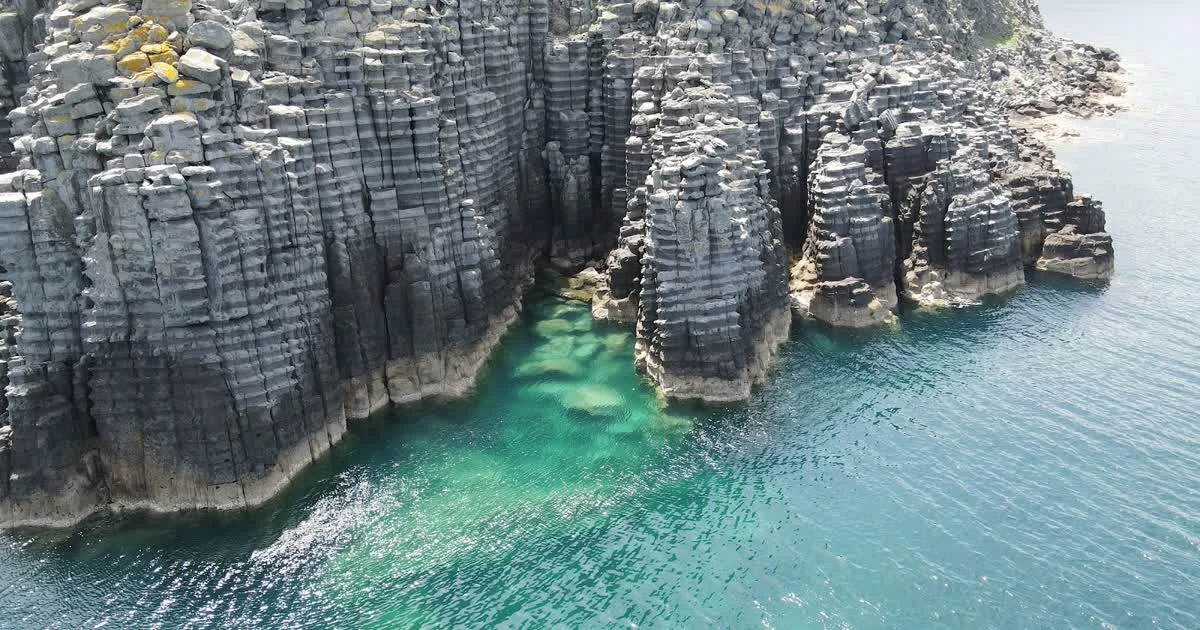
There's also the legend of the Kaskavalia rocks: In Gökçeada Imbros Magazine issue 2, an old woman's cheeses turn to stone, forming today's cliffs. These local tales, which give mythological explanations for the island's geological formations, are among the most intimate layers of Gökçeada's culture.
What Remains Today? Archaeological Evidence
Mythology is beautiful, but what tangible evidence is there? Actually, more than you might think.
Yenibademli Höyük has been excavated by Hacettepe University's Archaeology Department since 1996. Located 1.7 km southwest of Kaleköy, this mound reveals a settlement dating back 5,000 years — to the Early and Late Bronze Age. City walls, a planned street network, a collection of grinding stones, and traces of collective work organization point to the existence of a ruling class.
On the Kaleköy acropolis, you can see theater ruins from the 5th century BC, remains of a temple of Hermes, the Roksades cistern, inscriptions, and marble statue fragments. In the walls, you can see stones carved by the Pelasgians — the people before the Hellenes. A stone carved 3,000 years ago was later used in a Byzantine wall 1,000 years ago — layers of history stacked upon each other.
| Information | Details |
|---|---|
| Kaleköy Acropolis | 5 km from center, open 24/7, free entry |
| Walk to the top | Approx. 15-20 minutes |
| Yenibademli Höyük | 1.7 km to Kaleköy, active excavation site |
| Historic villages | Bademli (3 km), Tepeköy (5 km), Dereköy (6 km) |
| Best visiting period | June-September ideal; open-air sites on rainless days |
| Transport | Center-Kaleköy by car 10 min; minibus in summer |
Frequently Asked Questions
Where does the ancient name Imbros come from?
The origin of the name Imbros is debated. The three most common hypotheses are: from the Greek Ambrosia (food of the gods), from the Luwian Imaura (Great Mother Goddess), and from the Carian Imbrassos (Goddess of Fertility). There are also academic studies suggesting it derives from the pre-Hellenic Pelasgian language.
How does Homer mention Imbros in the Iliad?
In Book 13, Homer describes Poseidon tying his horses in an underwater cave between Imbros and Tenedos. In Book 14, Hera and Hypnos pass over Imbros. In Book 21, the king of Imbros, Eetion, ransoms the Trojan prince Lykaon.
Can I visit the ancient ruins in Kaleköy?
Yes. The acropolis area on the Kaleköy hilltop is free and open every day. You can see Byzantine walls, ancient theater ruins, remains of a temple of Hermes, and inscriptions. It's 5 km from the center, and the walk to the top takes about 15-20 minutes.
What were the Kabeiroi mystery rites?
They were among the most mysterious religious rites of the ancient world. Common on Imbros and Lemnos, their international center was the island of Samothrace. Unlike other Greek cults, they were open to everyone — women and men, slaves and free, Greeks and foreigners. Their purpose was to protect sailors.
What is Gökçeada's connection to the Trojan War?
Imbros was about 60 km from Troy and held a strategic position during the war. According to the Iliad, King Eetion of Imbros played a role in the trade of war captives, and Poseidon used the island as a base to intervene in the war. The Imbrians sided with Troy.
📍 Kaleköy Limanı — Harita
📍 Bu Bölgedeki İşletmeler
🏪 Diğer İşletmeler
🏷️ Etiketler: